
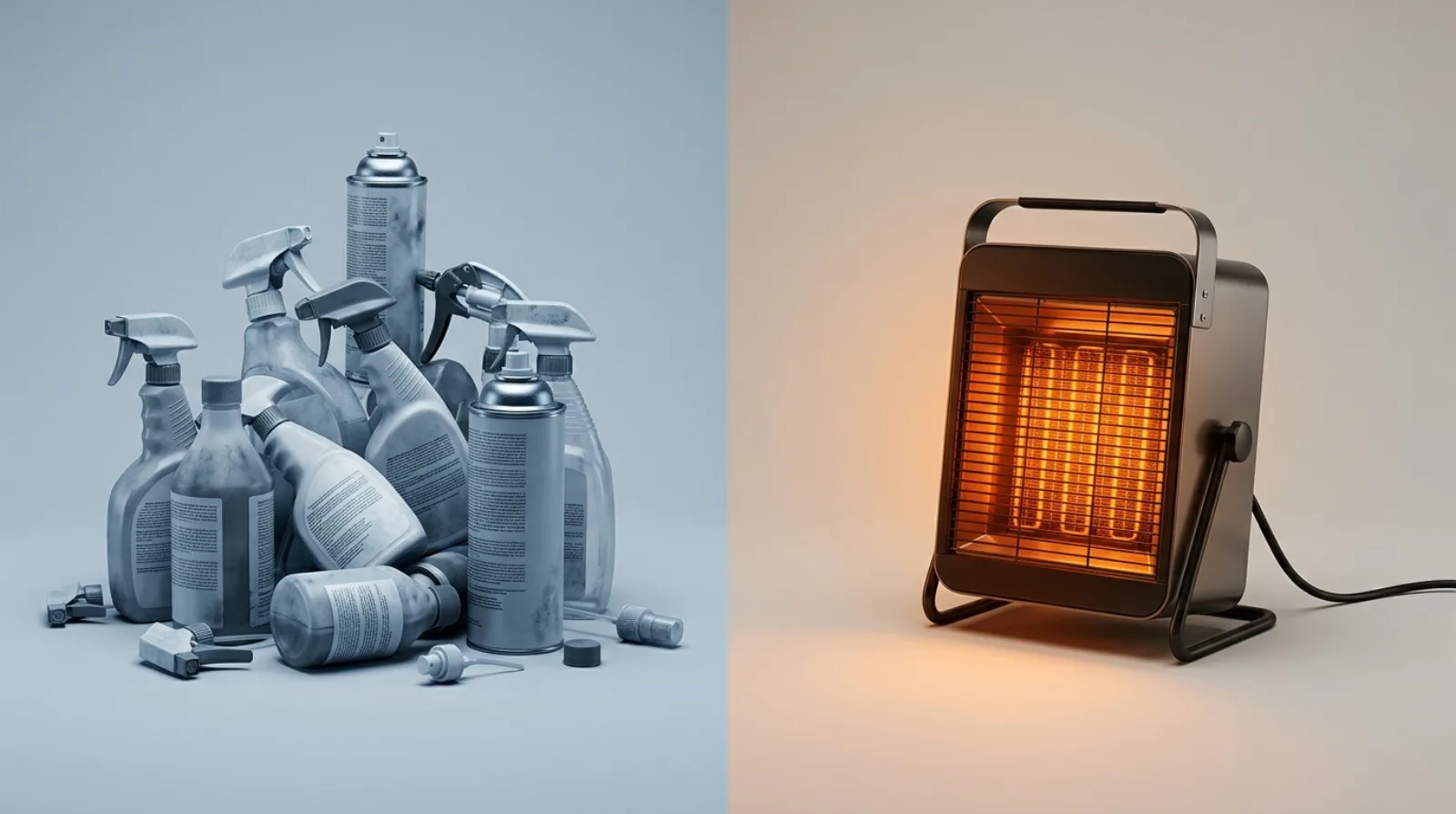
Where chemical plans fall short
Most pesticides labeled for bed bugs are contact killers. They work on the bugs the technician can reach and see, and they do little to the eggs, which hatch six to ten days later. That's why chemical plans are sold as a series of visits. Add documented pyrethroid resistance in bed bug populations across the country, and it's common to pay for three visits and still have bites.
EPA and CDC both warn about the other cost: overapplication, off label use, and total release foggers put pesticide exposure into bedrooms and living spaces while often failing to end the infestation.
Where heat wins
Heat is not a contact treatment. It raises the whole room past the lethal threshold, so it reaches bugs inside walls, under carpet, and deep in furniture. It kills every life stage, including eggs, in one session. And there is no resistance to it. When the room cools down, the infestation is over and nothing is left behind but dead bugs to vacuum.
Where chemicals still have a role
Heat has no residual effect. If you want a barrier against re introduction, a targeted residual treatment along baseboards after a heat treatment is a reasonable belt and suspenders approach, and it's a fraction of the chemical volume of a spray only plan. Mattress encasements and interceptor cups do most of that job without any pesticide at all.
The cost comparison
Professional heat treatment is the most effective option on the market, and most exterminators in East Tennessee don't offer it. The few that do charge a premium. Our rental puts the same commercial heaters, air movers, and sensors in your hands for a flat daily rate starting at $399.